





"Solemnity of Corpus Christi usually falls at the beginning of the rainy season. Scorched grass begins grow green. Dry rivers and streams fill up with rushing water again. There is no possibility to reach to the villages, those the farthest located from our mission. Need to defeat torn bridges, mud and sharp stones. During the rainy season to cross such a road is virtually impossible. You can only reach some of the chapels, located along the road a little better. During such the expedition you have to stay a few days in each of the villages, celebrate Mass there, confess of the faithful, baptize catechumens and where is possible adress their needs taking with you a little salt, soap and medicaments. For the celebration of ceremonies of Corpus Christi you can't reach all the places simultaneously. Please yourself imagine, that the average parish in the Central African Republic has between ten and twenty chapels and usually no more than two priests. Most of our Christians celebrate these ceremonies without the Eucharist. In the villages isn't stored the Blessed Sacrament. Sunday prayers led by catechists mainly focus on the liturgy of the Word of God. They so celebrate Ceremony of Corpus Christi. You can't hide, that some missing the sacramental presence of Jesus Christ. This can be seen very clearly during trips to villages in the bush. You can't describe the joy on each Mass celebrated.
Especially the elderly and children are delighted by this, that they may receive Holy Communion. Because adults, from time to time they go on foot on a mission to Zemio, where the Eucharist is celebrated daily. Even when one of the priests goes to the bush, the second one is left on a mission. Hence also inhibitants of Zemio are to some extent privileged. It's for them come down for the holidays the families and friends from the villages outlying sometimes after a few tens of kilometers, to take part in ceremonies. I remember such a meeting. Before beginning Sunday Mass, because Corpus Christi is moved on Sunday, I sat for a few minutes to the confessional. I came to the church before didn't come down our faithful. As a sitting, I saw an adolescent girl, who jumped out from the bench and came up to me. I thought, that she wanted to confess. It proved, that first she wanted to greet me. She gives me her hand and asks if I recognize her. I had to admit, that not much. After all you have given me a baptism - she answered. Where are you from? – I asked - from Bananga. I came here for my aunt and I will stay a few more days in Zemio - she said. She passed almost eighty kilometers walk. Just a few years ago the mission Zemio was led by Italians. Our faithful won't accustomed to Polish customs making a procession to four altars outside the church. Being on a mission with African, a Franciscan from Zaire, I didn't want to suddenly change everything. I persuated them only to this, to make exposition of the Blessed Sacrament after ended the Mass.
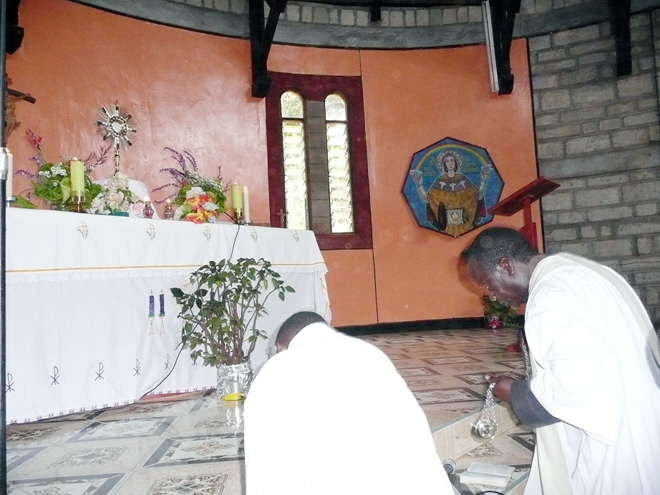
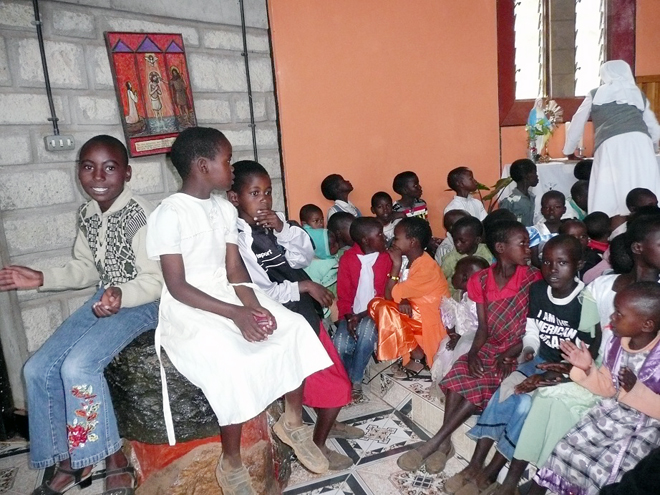
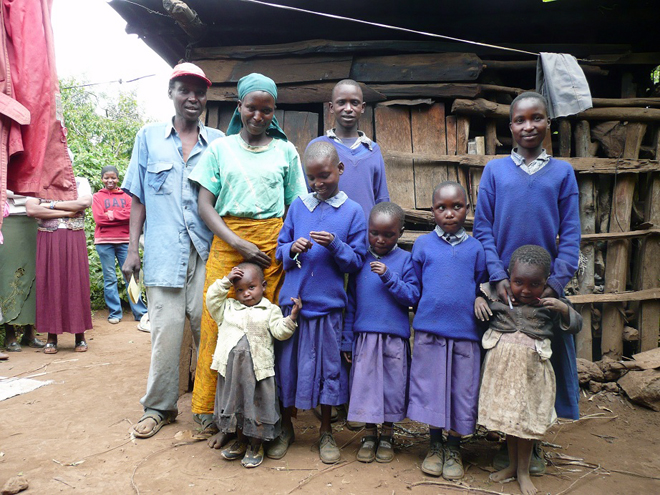
Otherwise it's while in the neighboring mission, where after the Dutch Spiritins, ministry took the Poles themselves. There goes out a procession to four altars arranged on the main paths between the houses. The Priest carries the Blessed Sacrament. Then the greatest joy have children. Because for every day they have to themselves organize their free time. They don't have a TV, or computer games, and the parents only occupy their of work. It's for them honor to sing themselves and go with the adults in the solemn procession. They know about it, that goes with them Somebody very important, before Whom bow to even adults. Just as we have in Poland, it comes itself with the Lord Jesus visiting the farms. The only difference being their houses covered the African grass and black faces of participants of the procession. Very well was received there, the way of such celebrations of Corpus Christi. In a rhymic singing (tamtams) local Christians manifest their faith, adoring God hidden in the form of bread."
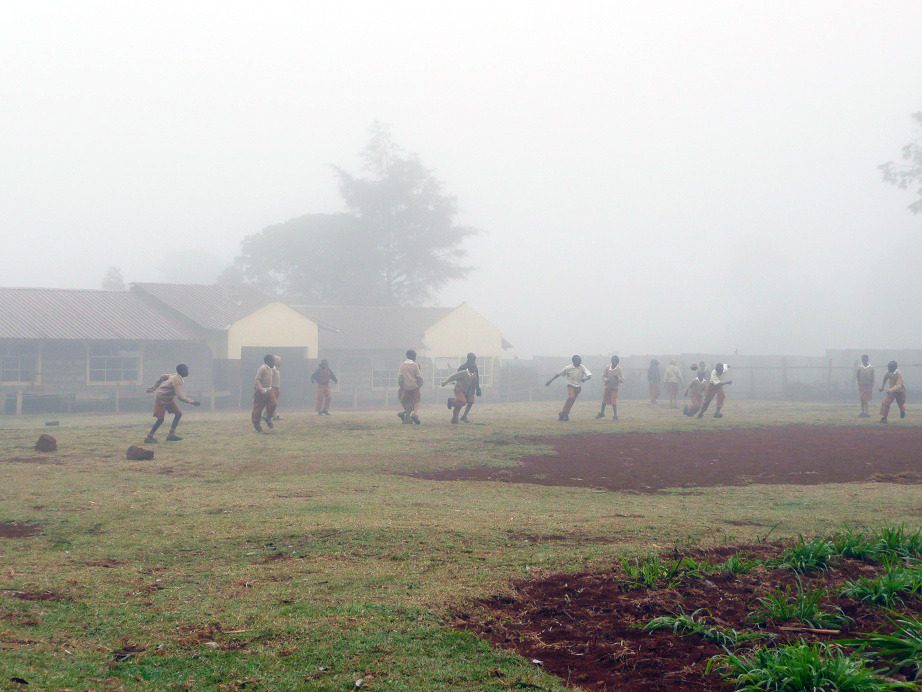
"Perhaps no one will believe me in it, but today we have a typically English weather, is foggy, gloomily and in addition drizzling. African watches slowed even more, people go out into the street if they must, only the kids from parish school, as if nothing happend, they kicking the ball and wallowing in the wet, though the dried grass. The mission also is calmer today, because s.Alice takes back aspirants to Meru, s.Makena in the office of parochial does the settlement, s.Kate in the great world, ie. in Nairobi still takes care of the formalities associated with the trip to Madrid, novice Monica engulfs home after yesterday's earthquake, and I have finally time, to sit down, make myself a fruit jelly and describe it, what happen at the last few days. Began on Saturday, at first shopping and preparing food packages for women working in the field at Mission, and later in the village had become a great stir. Two mzungu, ie. s.Alice and I, took to the road and began to pluck the flowers from all the surrounding bushes. On the side roads, it yet didn't arouse such the sensation, but when when we grabbed thickets at an asphalt, gathered around us a lot of people, who had a good subject to conversation : what these white men here do? Discussion took place in kimeru, so was difficult to us to put one's two cents worth, and beside, they would still not understood, what it is the procession of Corpus Christi.
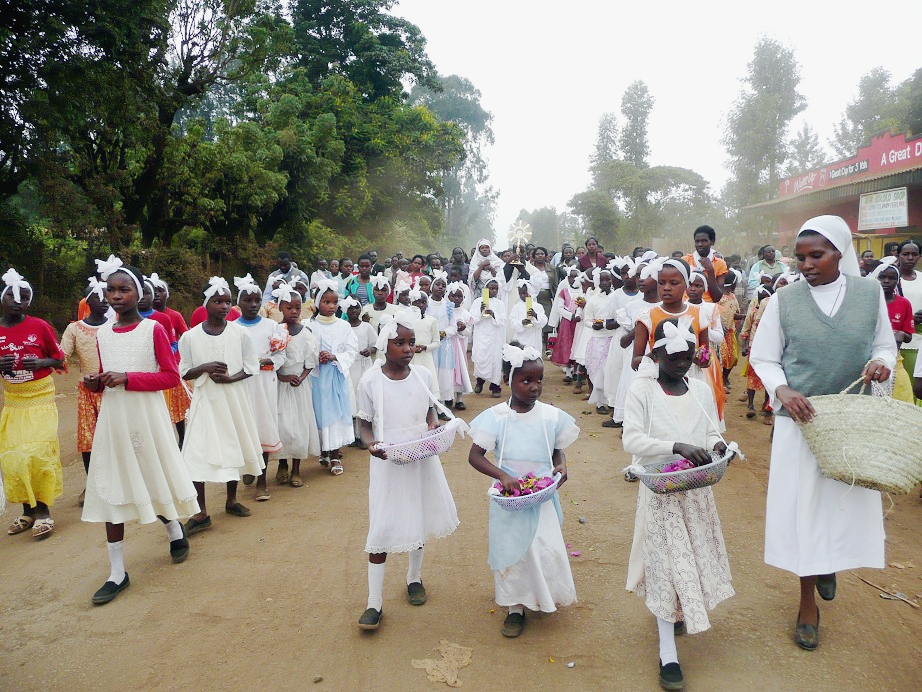
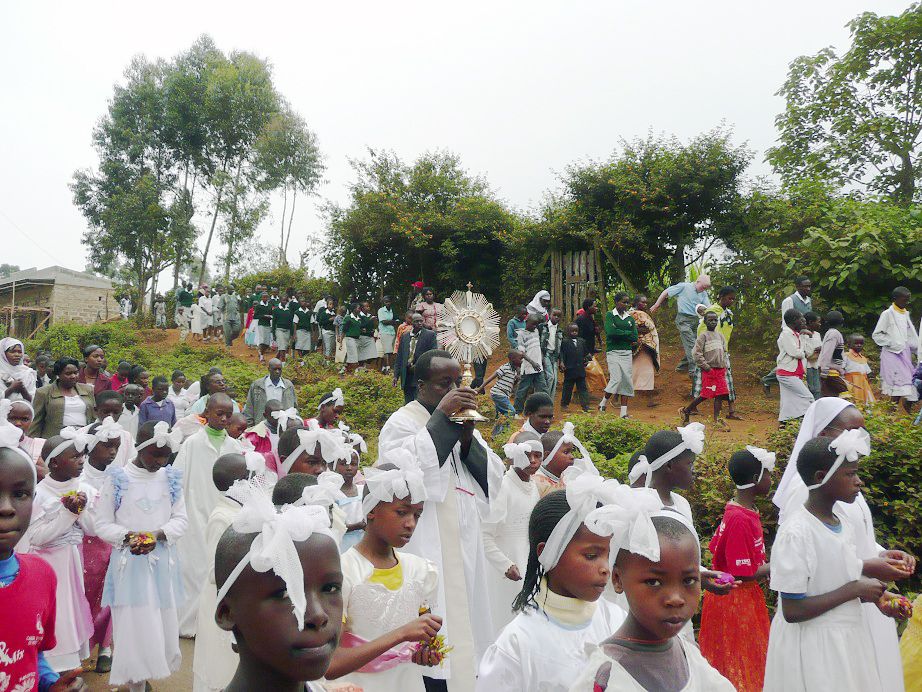
Yes, it just now the preparation for the first in the history of the parish Laare procession with the Blessed Sacrament aroused so much sensation. To collect flowers we hired later children, who practiced dancing on a Sunday celebration, they with great joy rushed on all the surronding trees. Here the celebration of Corpus Christi was moved to Sunday. The same will be with Peter and Paul, whose we will celebrate just now 3 July on Sunday. I suspect, that it has to do with this, that Kenya is multicultural and multi-faith country, and the Christians are here about twenty percent. But back to our procession, on the Sunday immadiately after breakfast, children brought us some flowers, so it gatherd four baskets. Sister invented, that it would be good to decorate the kids some common element, therefore she dedicated one mosquito net, to make girls cockades on their heads. To us it may seem ridiculous and pot hopeless, but here it have done a sensation. We al went to the public school Murungene, where the procession was to begin at 10 am. One hour slipping, it after all no delay, so we started after 11. On the square hadn't gathered many people, if not girls from high school and children sprinkling flowers, it from the school gate would never exit many people, but as to the first procession and so it was no bad.
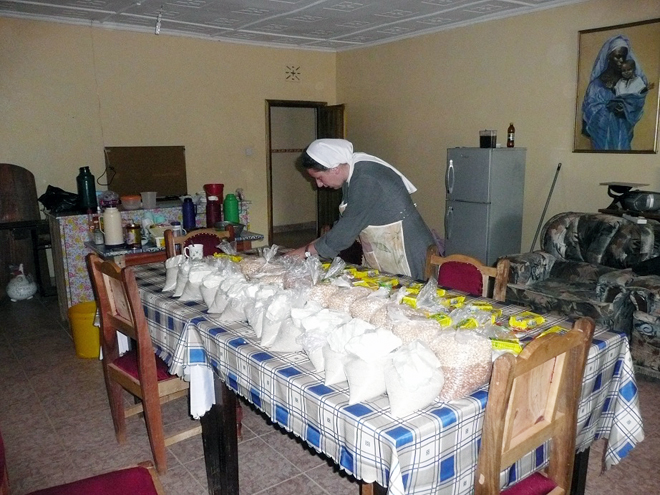
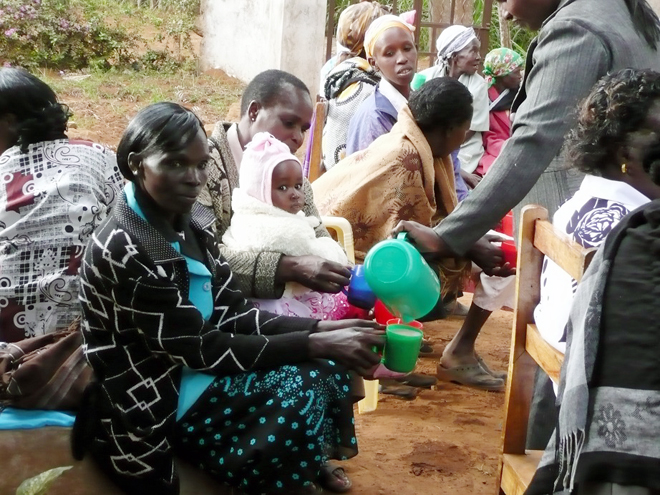
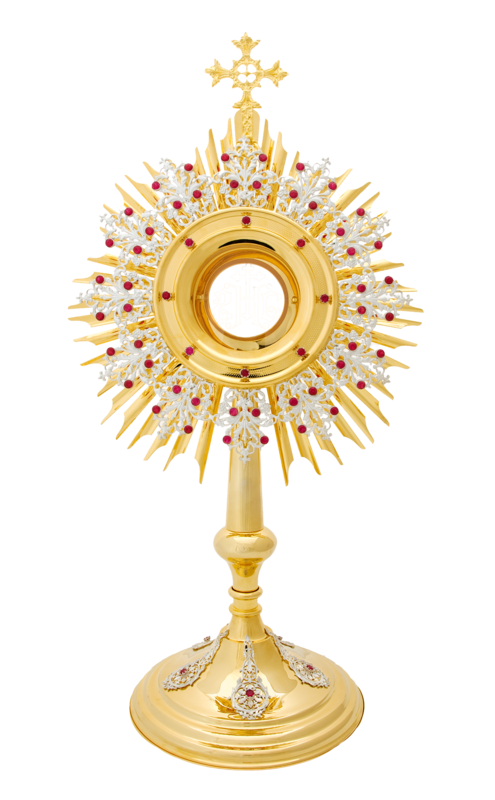
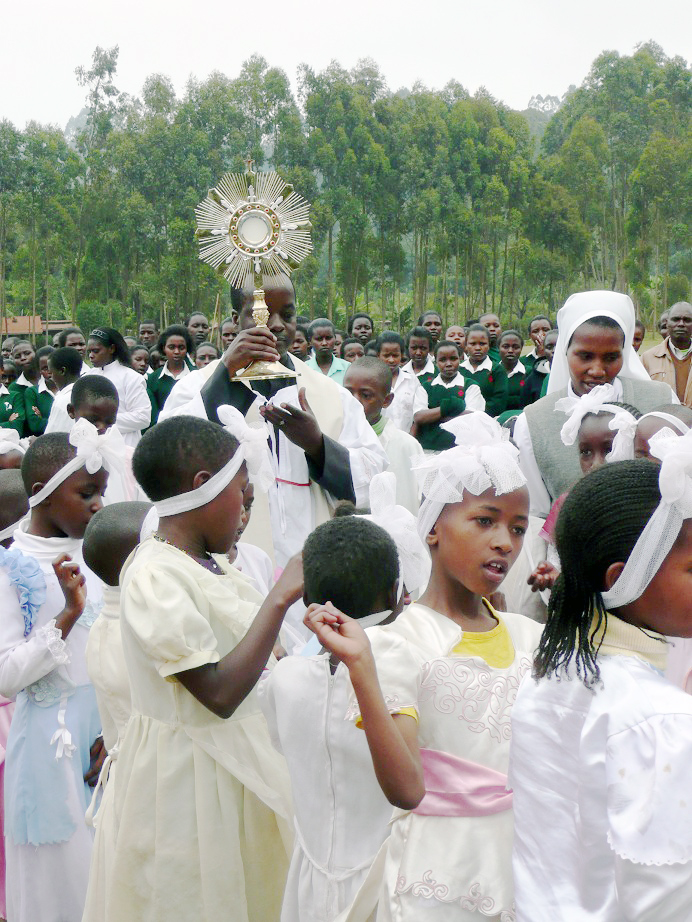
There was the monstrance, which Sister brought one year ago from Poland, there was no need to carry the Lord Jesus in a glass, was a thurible already somewhat dilapidated and candles, which didn't want to burn, beacause the wind was too strong. Along the way joined in succesive people, while others only stared and they thought themselves, what kind of miracles are happening in our village? Mukembu, Mukembu, Mukembu (Saint), cried the kids, and they all sang so, that the heart was beating harder. The priest bravly carried the monstrance without any help, fortunately the distance from school to church it's some 500 m. After the procession began the solemn Mass with numerous songs and dances, the long processions and yet the longer speeches, but for that I could become accustomed . It was beautiful and solemn, and for the year, will hopefully, people of the village won't be so surprised at the sight of the pickers of flowers. Hardly we returned from Holy Mass to home, and already we had get on with preparing the other event. Once a year to visit the sisters come women from the parish, to pray together, sing and socialize. This time they descented about 130, so preparation so many places outside the house, there was no simple matter. Later a modest meal, tea, were even dancing, and of course the speeches… Women bring with themselves always modest gift in the form of what they will gather in own garden . Such a way in the warehouse were more than two bags of avocados, various types of beans, corn, rice, bananas, and even the stems of sugar cane. Embrancing all it took us a long time, although there were a lot of hands to work."